
Co-created lime-time (or what Sensory Theatre and research can learn from each other)
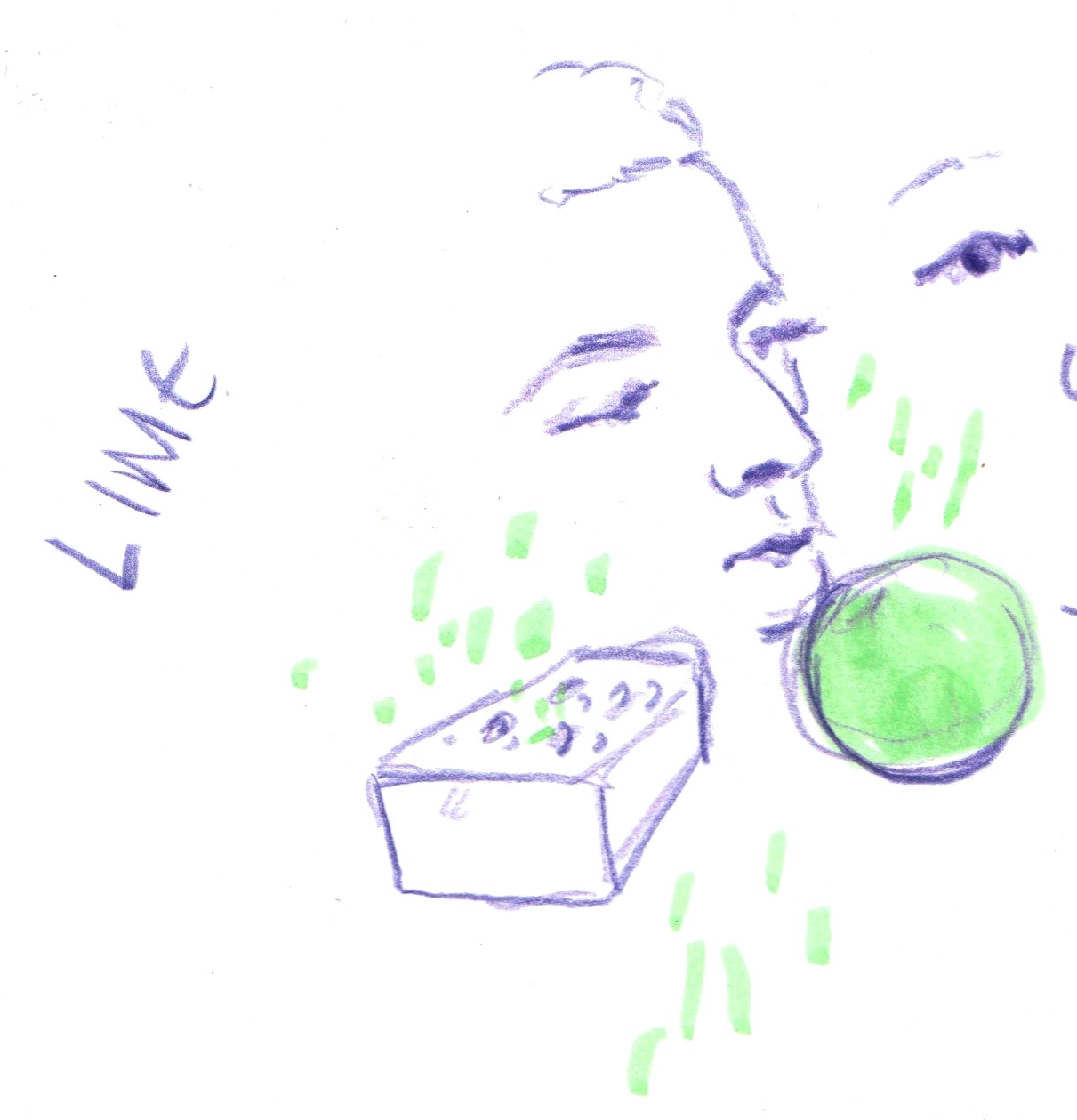
Co-created lime-time
I grate a lime in the air between myself and K. We share its zesty tang. As recent audience members of InSideWays – Oily Cart’s latest At Home theatre production – K and his family have joined this sensory evaluation session so we can explore their experiences of the show.
The lime is part of a sensory tasting menu from InSideWays (see here for info about this). I offer K the fruit to hold, and as he lifts his hand to take it, the lime slips from my grasp and lands on the floor. K laughs out loud. I pick it up and pass it to him again, it drops into his lap. K, his carer, and I all laugh together. We play like this for several minutes, enjoying the rhythm of our co-created lime-time: connecting, sharing joint attention, and meeting each other’s playful energy.
Becoming Oily Cart’s Researcher-in-Residence
I am a researcher and occupational therapist and have worked throughout my career alongside disabled people who experience multiple and complex barriers to access. These two roles inform and enrich each other:
- As an occupational therapist, I hold the belief that the things we do, the activities that fill our daily lives – have a significant influence on our health and wellbeing. When an activity is meaningful for someone, it is described as an ‘occupation’.
- As a researcher, I am in the final stages of writing up my PhD, which took a sensory and embodied approach to explore, alongside five students labelled as having profound intellectual and multiple disabilities, how engaging in ‘occupation’ can facilitate a sense of belonging.
I have been aware of the groundbreaking work of Oily Cart for a while, but my professional interest deepened when I encountered their Being With report. This drew attention to a key element in my own work – the importance of taking time to get to know and understand someone’s unique way of being in the world, as a foundation for creating relational connection. That was the spark that drew me to become Oily Cart’s researcher-in-residence. I wanted to find out, in a more sustained way, what else our two fields could teach each other.
I knew that a research residency at Oily Cart would be a rich and diverse experience. What I didn’t expect was how becoming Oily Cart’s Researcher-in-Residence would draw out some of my other, less-used skills. My Dance Movement Psychotherapy BTEC; time working at festivals creating immersive environments; and what I learned from my Master’s dissertation, where I explored how to evaluate activities that are important to people, all came in handy.
Over the residency Ellie and I worked together to discuss complex ideas about being, belonging, and accessibility, all significant themes in my PhD research. I contributed to a new Oily Cart publication, Making SideWays, about the creative process involved in the show; and spoke as part of a live panel at Young V&A and on a video podcast about creativity, access and connection. Part of my role was also to co-design and facilitate sensory, in-person evaluation sessions with families like K’s, offering people the opportunity to express what they felt about aspects of the show in sensory and embodied ways. I also began to consider what defines theatre as an art form and learnt (through some very gentle feedback!) about adapting my writing for different audiences.
What Sensory Theatre and research can learn from each other
A joy of this residency has been coming to understand the depth of resonance between aspects of occupational science theory (how daily activities shape our wellbeing) and Sensory Theatre. The idea that a sense of belonging emerges from engagement in shared, enjoyable activities is key both to Sensory Theatre, and in my research. Evaluating InSideWays with family audiences emphasised this in real, tangible, everyday ways. Parents and carers spoke of the sense of connection that came from the InSideWays experience, the spontaneous shared moments of joy and play, and how seeing other families post about their family’s experience with the show on social media created a sense of being members of a wider community. I have experienced firsthand how research that is accessible can be a powerful framework and source of rigour in the playful realm of Sensory Theatre. As the evaluation session with K and our co-created lime-time shows, you can be silly and serious at the same time!
There were plenty of instances of Sensory Theatre directly enriching my research, too. For example, through meeting with Oily Cart’s audience members and their families we got to explore people’s reaction to the InSideWays show directly, and I was able to experience how people with vision impairments enjoyed interacting with the colourful shadows created from the specialised light bulb in the Dark Purple Drawer. One parent I interviewed put this eloquently, explaining that the colourful shadows let his daughter build up her experience of light through layers of colour:
“Through the different spectrums of lights, the blues, the greens, purples, reds over her eye, that worked, you did see a reaction to it… to see that spectrum of light come through, that was quite interesting to see her response.”
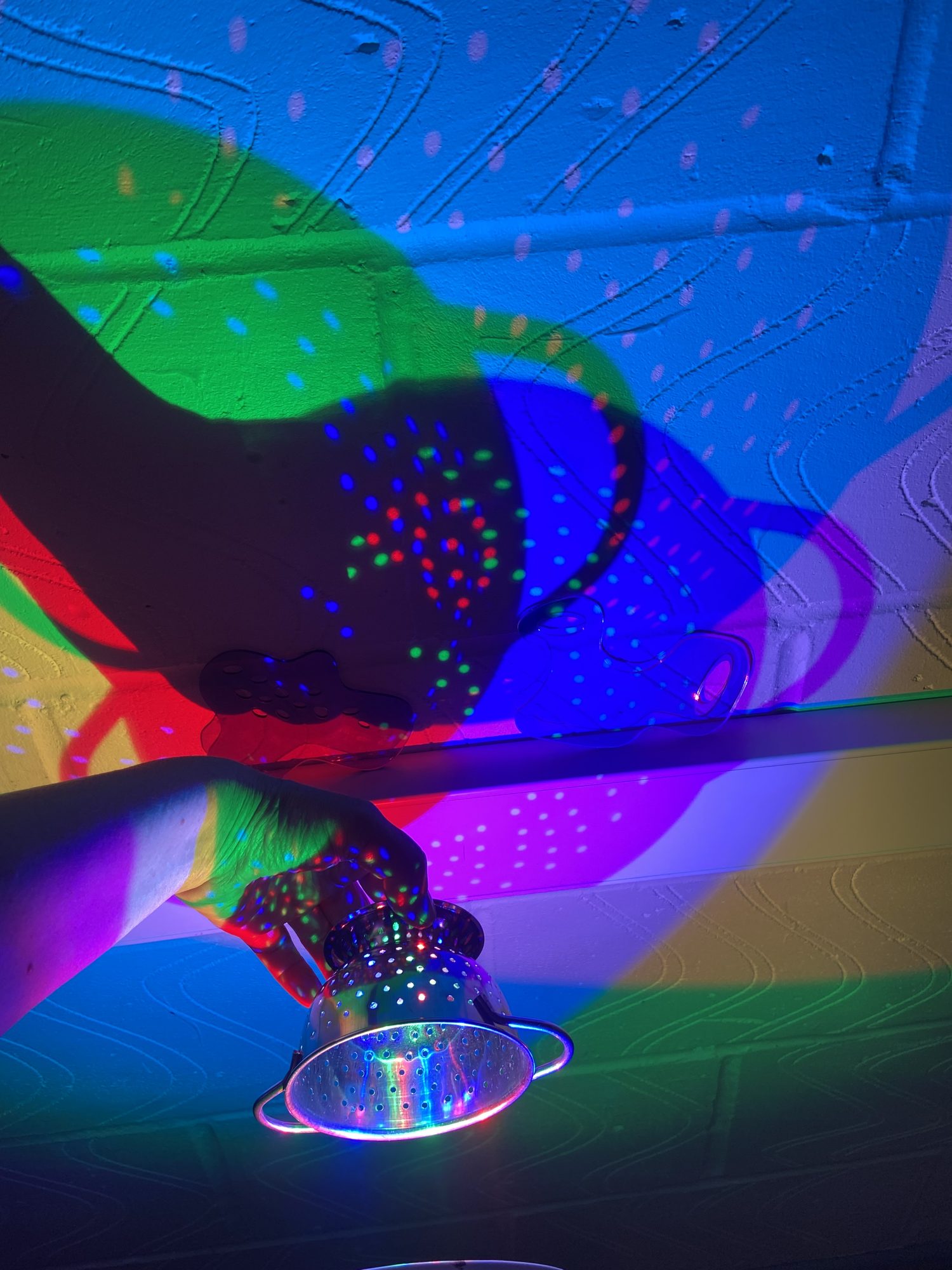
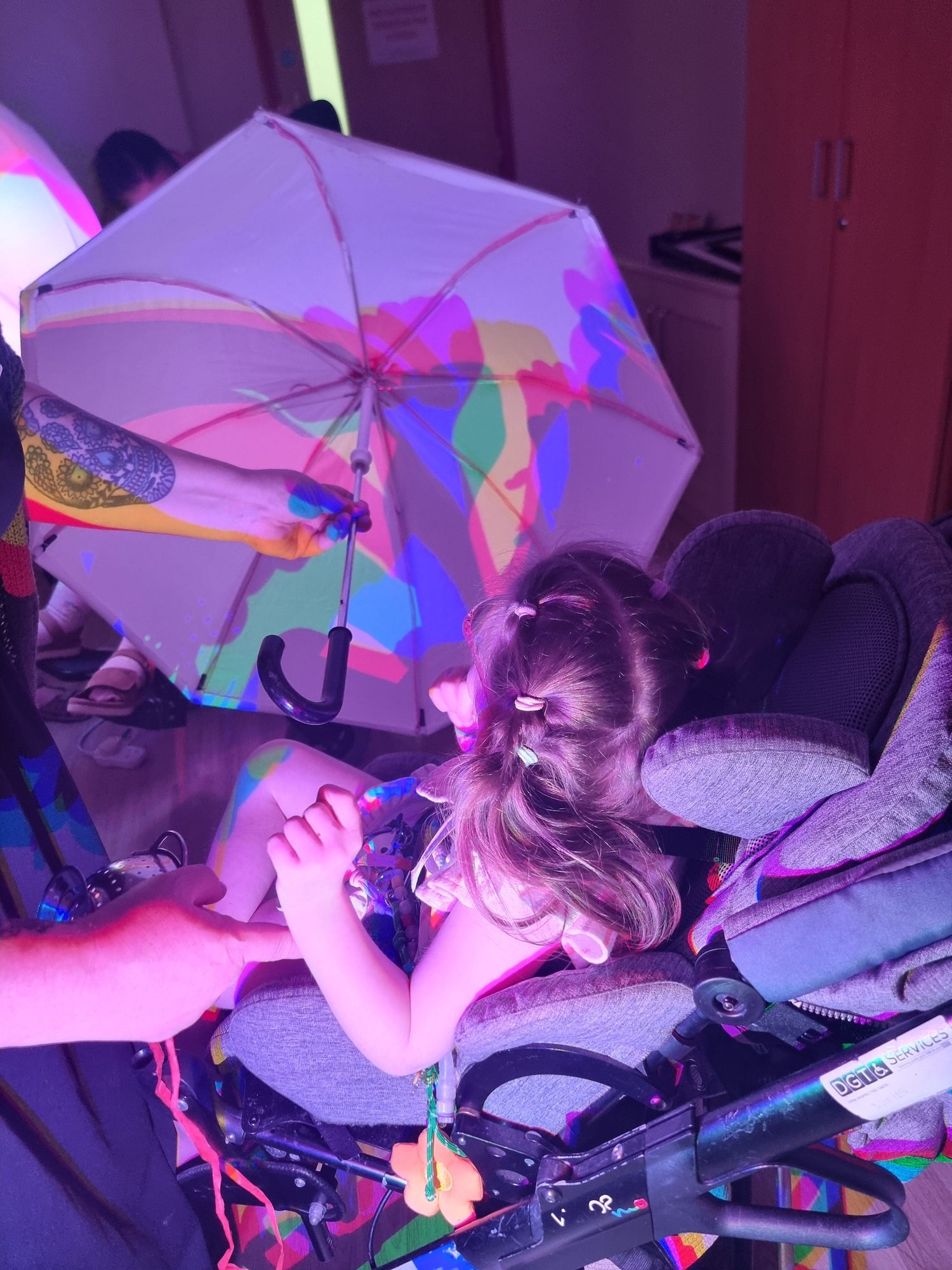
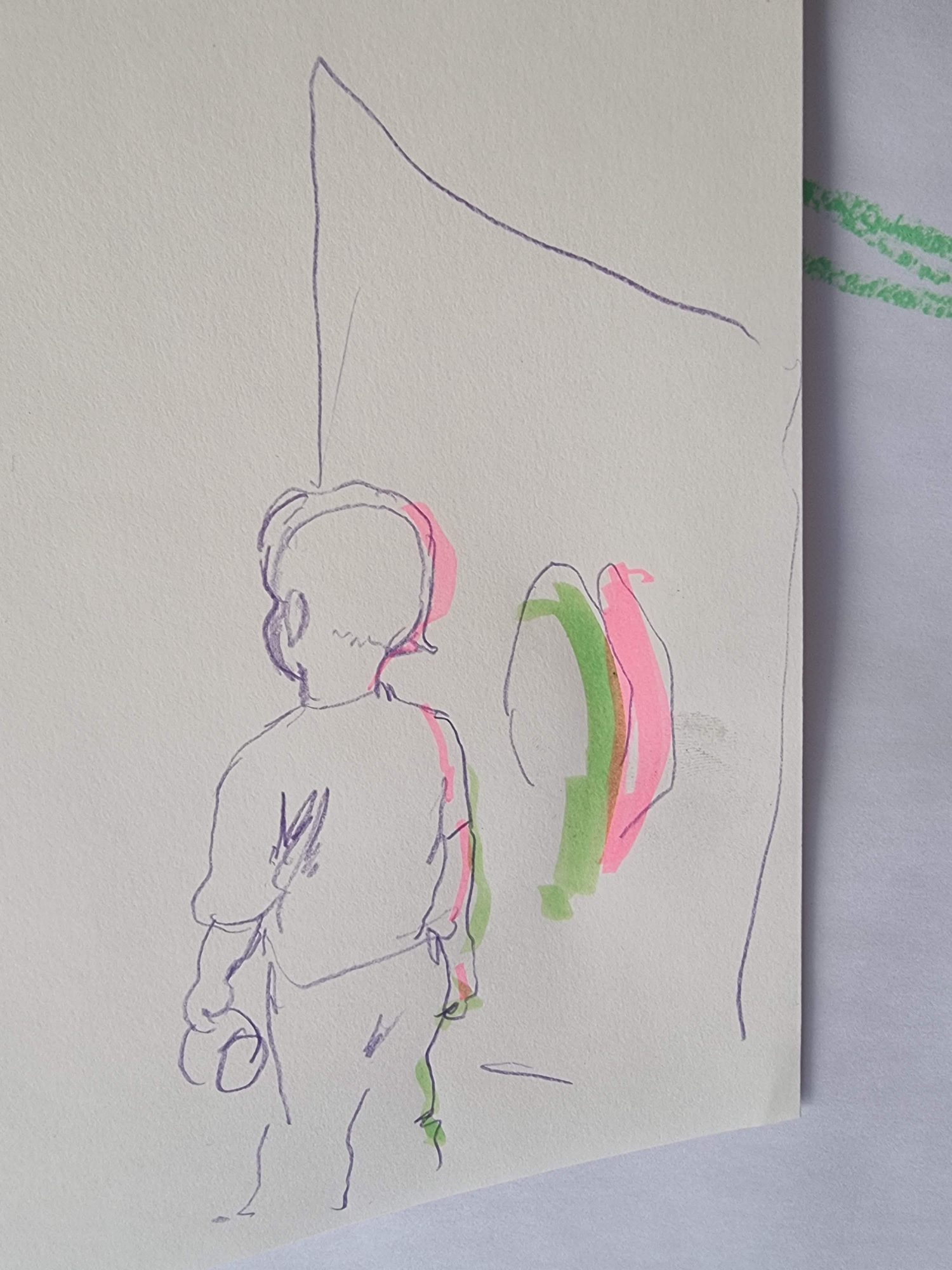
One of the young people at the centre of my research has a significant vision impairment, and one of the experiences I write about is him enjoying an adapted roundabout in his school playground. He wore a GoPro camera during his time on the roundabout, so I have footage taken, as closely as possible, from his own perspective as he goes round. Reflecting on my work with Oily Cart prompted me to revisit this footage, and to reconsider how the sunlight would have shaped his experience. As he rotated, he met the sun at a regular interval, which coincided with the moments he was greeted by me and his teaching assistant, since we were standing with the sun behind us. I was able to add this layer of additional sensory complexity to my analysis of the experience, something I had not paid enough attention to before.
That is just one granular example. On a macro level, Sensory Theatre reiterated something important: including and amplifying the perspectives of disabled people within both research and the arts is essential and, in some areas (outside Sensory Theatre, and my small research niche), very overdue. Things are changing, but there is much work to be done before people who experience multiple and complex barriers to access are included and valued for their unique and rich contributions.
My PhD research is interdisciplinary, drawing on occupational science, education, and belonging theory. This interdisciplinarity is a strength: the questions I am asking are complex, and no single field could answer them alone. My residency showed that Sensory Theatre has much to offer other disciplines, just as academic research has much to offer Sensory Theatre. But more than anything, it was a reminder that insight is not the property of any one discipline, it flows in multiple directions and in multiple forms: between people, between disciplines, between the sensory and the scholarly.
With thanks to the South Coast Doctoral Training Partnership for funding this research internship, and my doctorate.
Elspeth is a researcher and an occupational therapist interested in how creative occupations support connection and belonging.
Connect with Elspeth on LinkedIn and follow her on Instagram @elsclark23
Listen to Elspeth talk more about her research here: https://open.spotify.com/episode/6X9JvHUk8xPucFWAZ7SRBW
InSideWays is an international collaboration between pioneers of Sensory Theatre, Oily Cart (UK), Sweden’s trailblazing sensory producers Scen:se and regional theatres Folkteatern Gävleborg and Estrad Norr (Sweden).
Want to go further behind the scenes?
📖 Book Making SideWays: Field Notes from the InSideWays Creative Process
🎥 Video How We Made InSideWays